Please visit our Calendar for listings of upcoming Member-to-Member Garden Tours.
In addition to the Calendar listing, we also advise members via email about each Garden Tour and its address. Member-to-Member Garden Tours are for Wild Ones Ann Arbor Area chapter members and their guests only.
One of the benefits of being a Wild Ones Ann Arbor Area member is the opportunity to explore the gardens of other members, who welcome us to their home gardens, ranging in size from compact city sanctuaries to multi-acre expanses that include woodlands, prairies, perennials, and more. We try to have one or two yard tours scheduled per month, April through October.
Experiencing first-hand what other native gardeners have created in their home landscapes is inspirational and educational. Member-to-member garden tours are a great way to learn about what trees, shrubs, forbs, and grasses grow in our area. See how other members have tackled common home landscaping problems and learn what area resources they have utilized. As the host, it is a pleasure to share the results of your gardening efforts with others who have the same interest in natives. As a chapter, we encourage each other to bring nature home. Native plant newcomers and experienced native planters alike are encouraged to show and tell their story.
Submit Your Yard for a Tour
Early each spring, we invite members to offer their gardens for tours, selecting the best month from April to October for viewing, but you are welcome at any time to submit your yard for a tour. A landscape is never finished, it is always a work in progress, and there are often different things to see at different times of the year. If you are interested in having other members visit your yard, please send an email to [email protected] and someone from the board will contact you to schedule.
Past Member-to-Member Garden Tours
2025
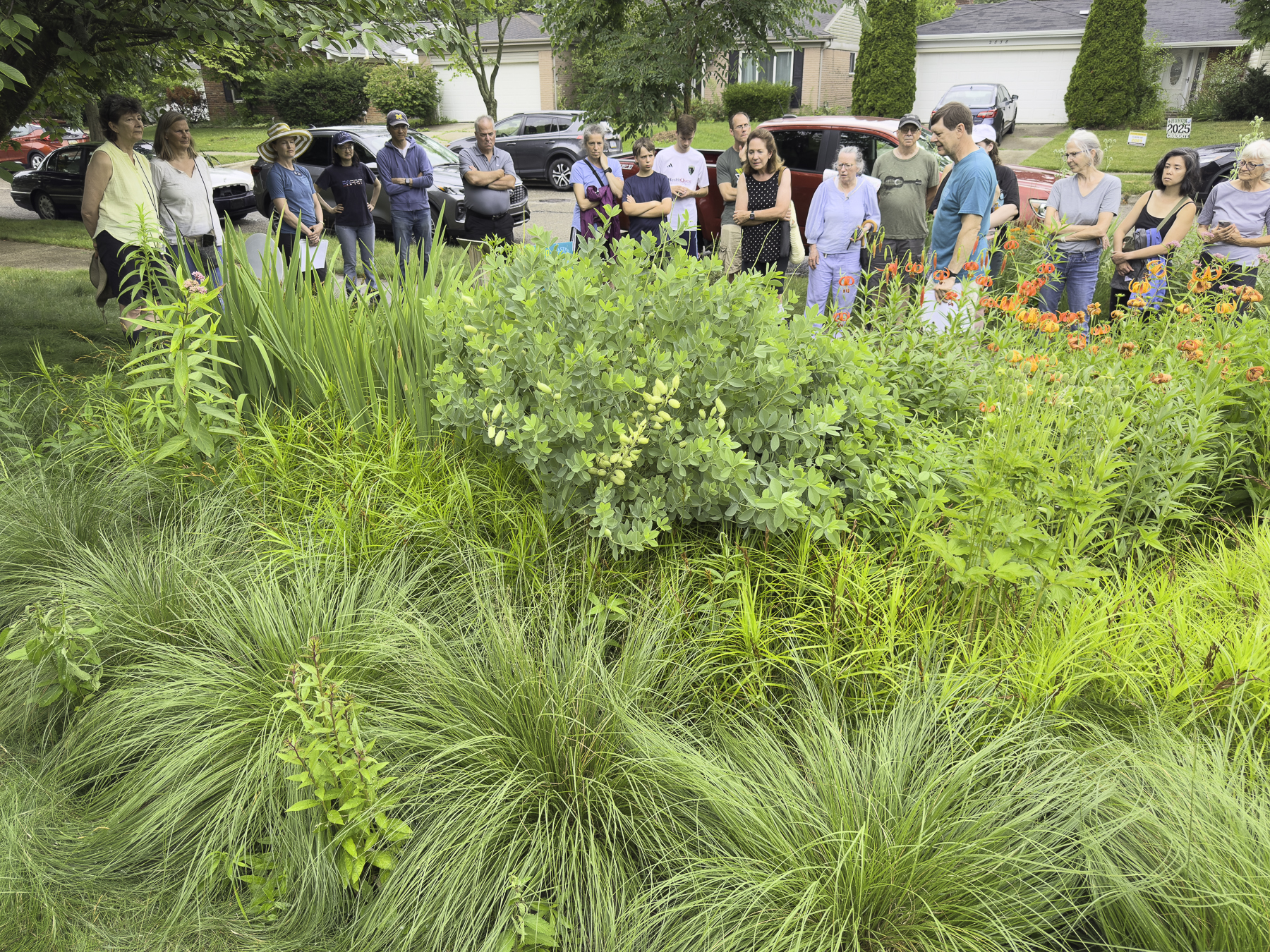
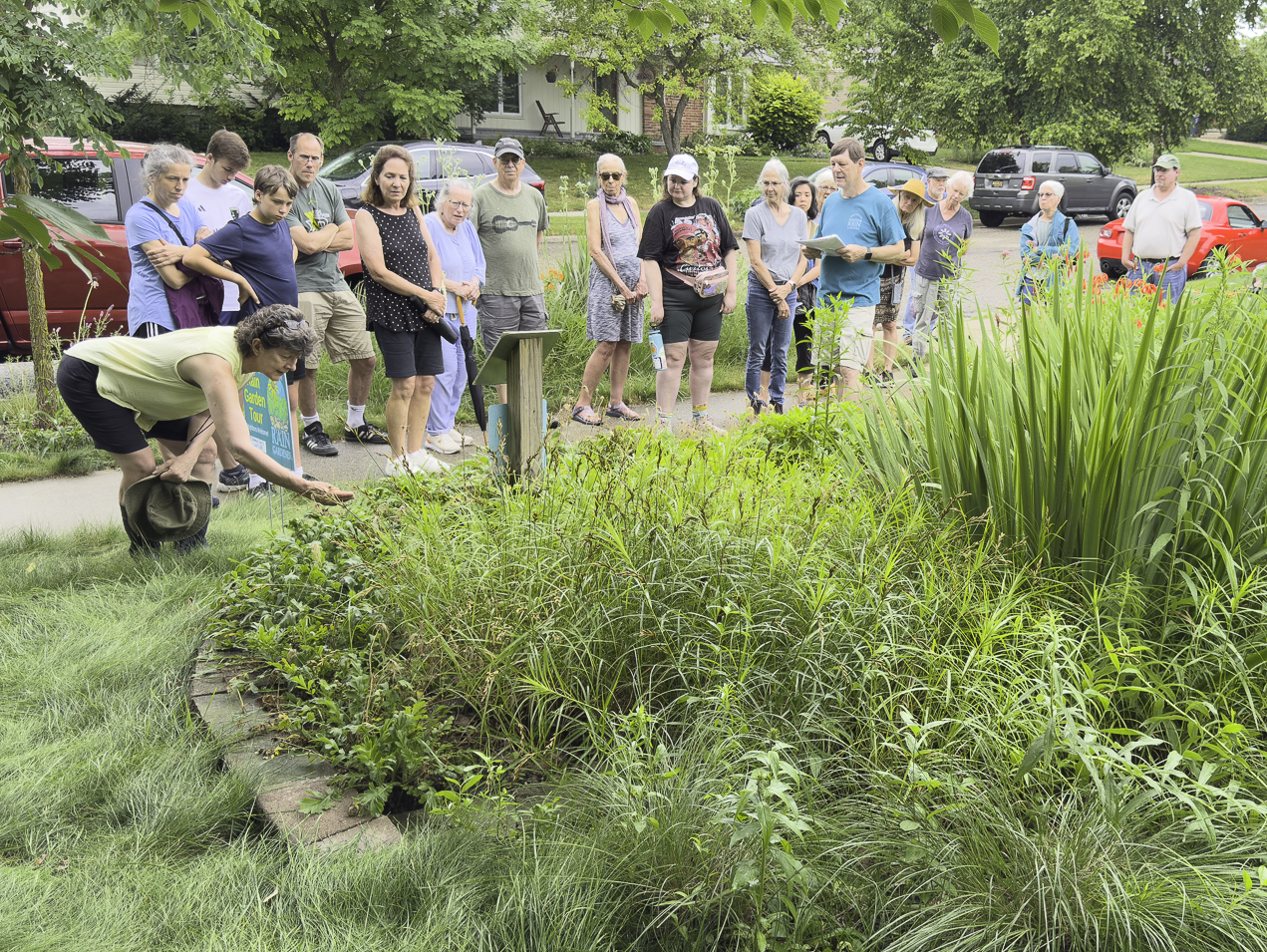
JULY / Jim V.’s garden – Beginning in 2014, Jim began the process of replacing non-native plants and lawn with natives in his 60′ x 120′ (0.165-acre) city lot. Each year since, edits have been made and more plants added, with the yard currently sporting over 80 native plant species and no-mow grass (a fine-fescue mix) instead of traditional turf grass. This tour for members of the Wild Ones Ann Arbor Area chapter and the Master Rain Gardener program will feature the front yard rain garden (2016) and the moisture-loving plants in the low area along the back edge of the lot.
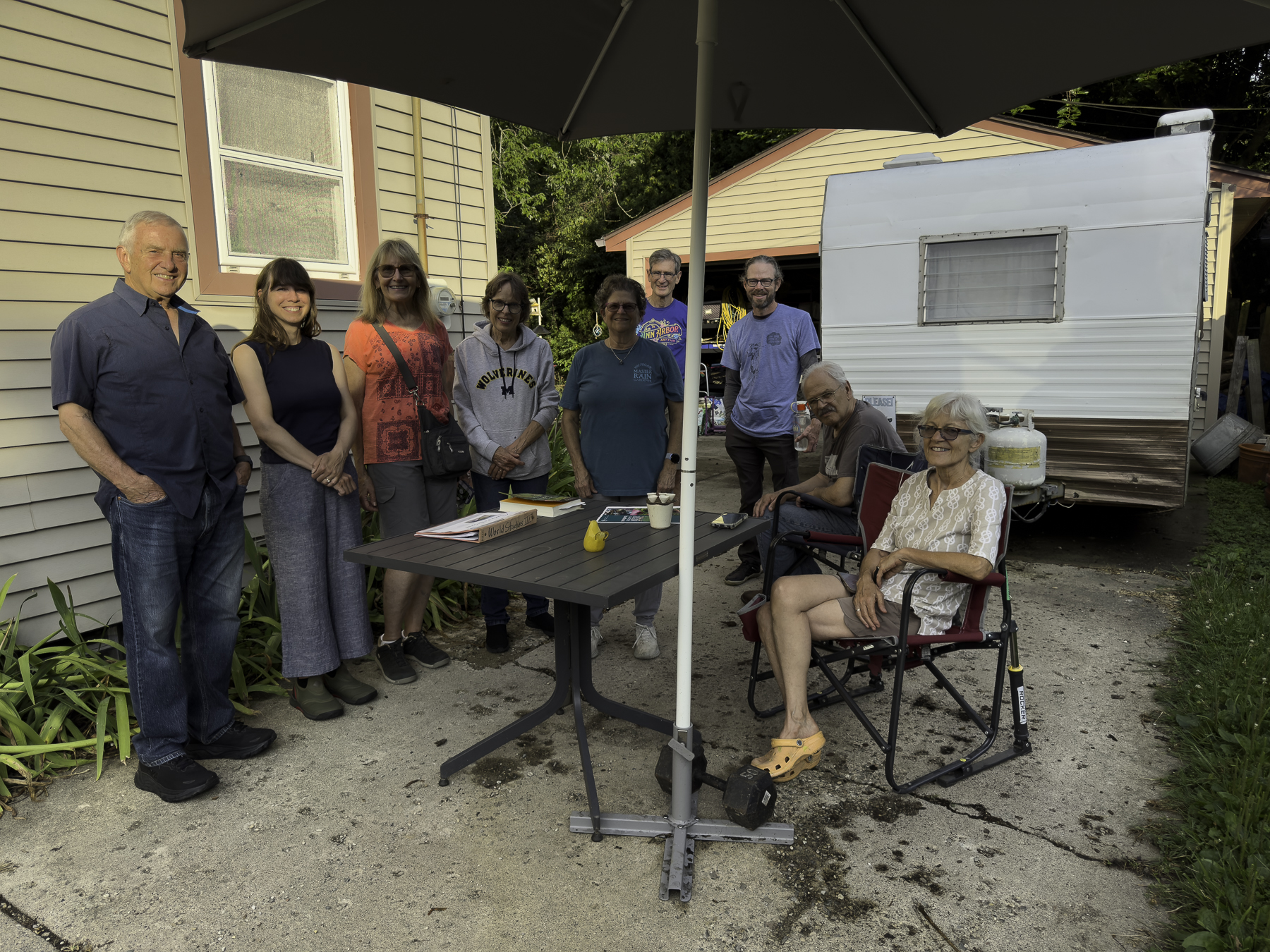
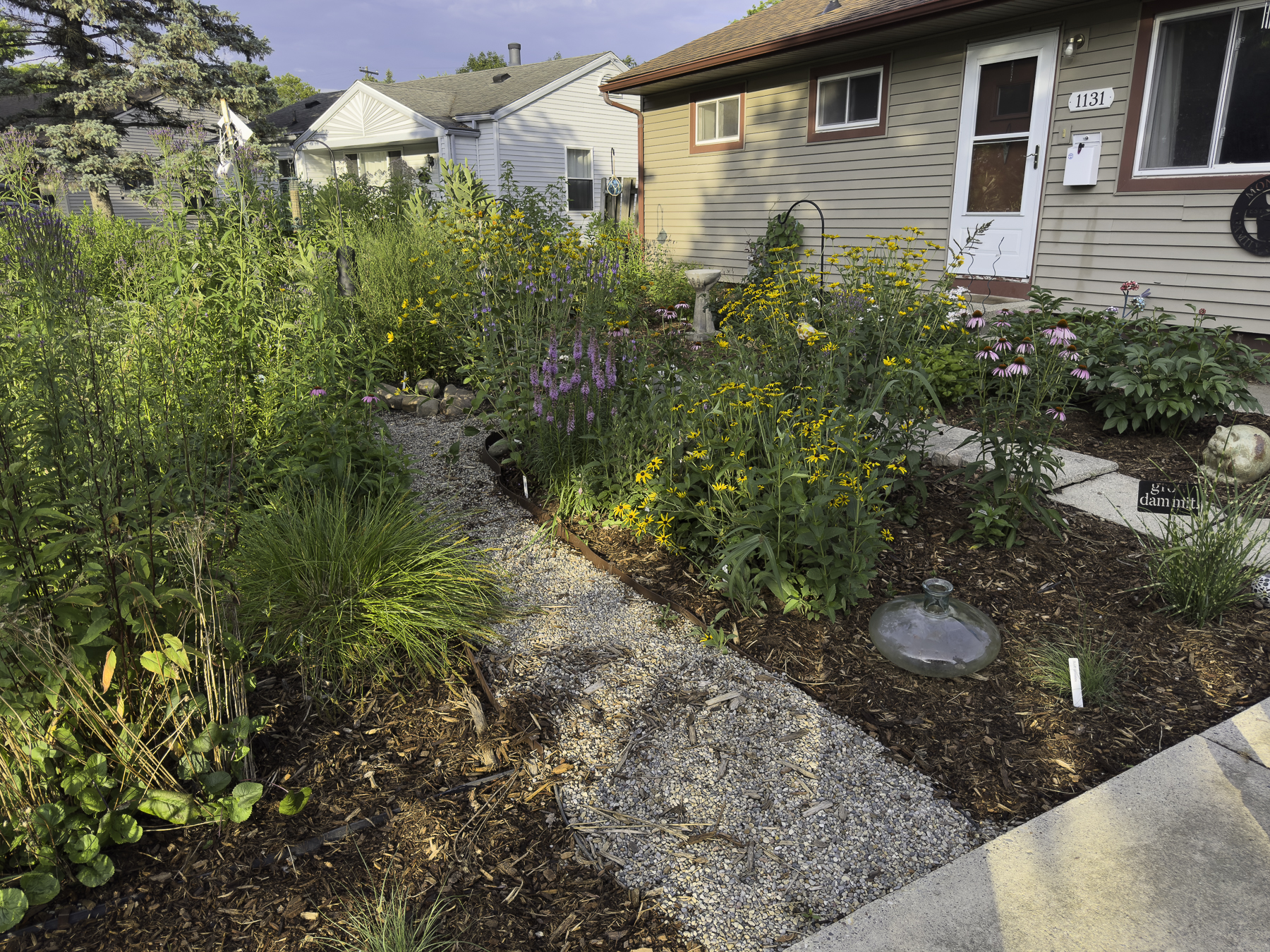
JULY / Rain garden of Julie M.- We started our garden in spring of 2022. Our property had major drainage issues which we were able to mitigate with a lot of hard work digging trenches and putting in the first iteration of our garden. Each year we have expanded and redesigned the garden so that it now occupies the entire front yard. Before we had even done more than dig, the site of our rain garden had been a sponge, absorbing runoff from the gutter and a trench around the back, as well as discharge from the sump pump. Rain gardens rule!
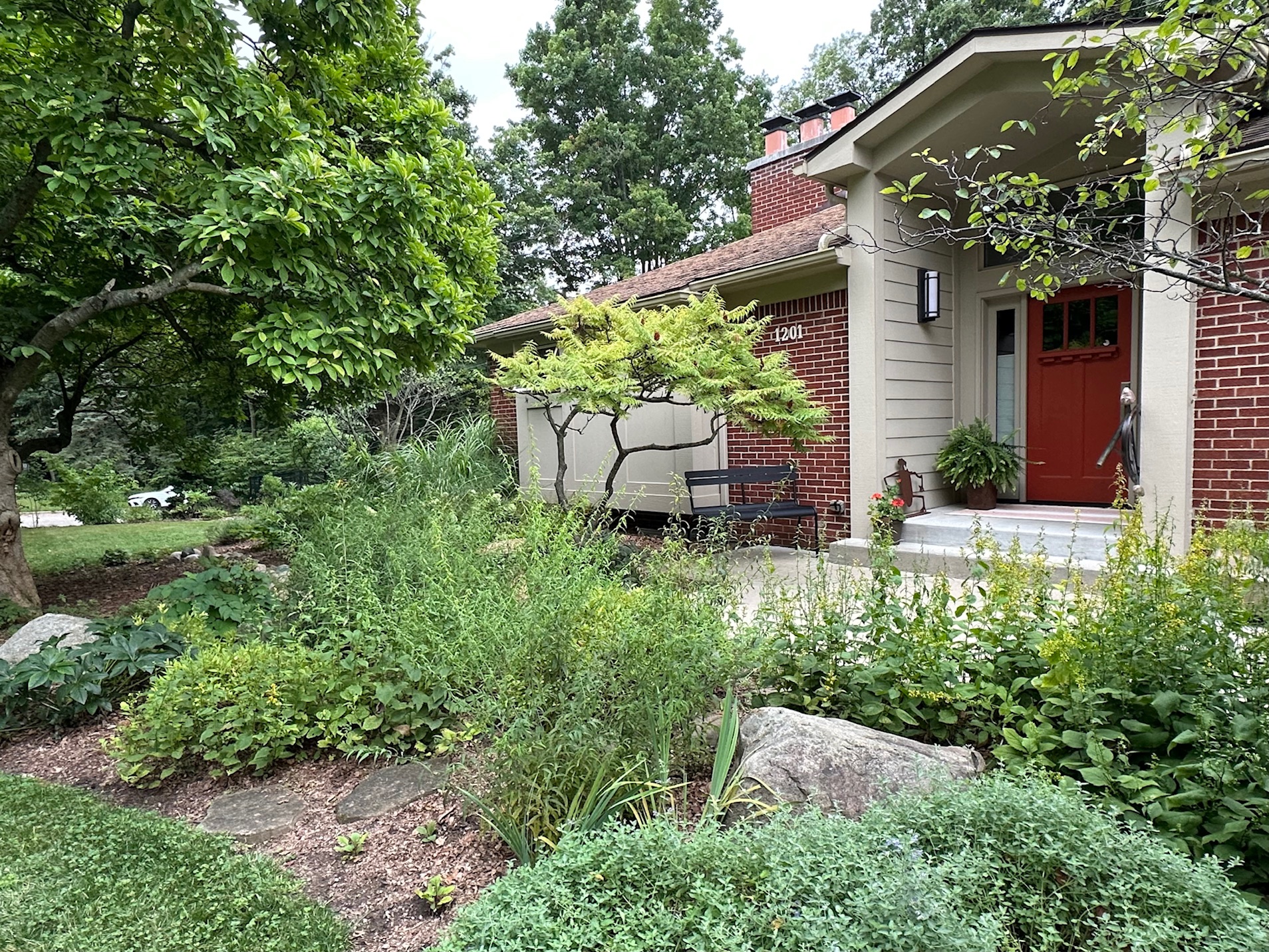
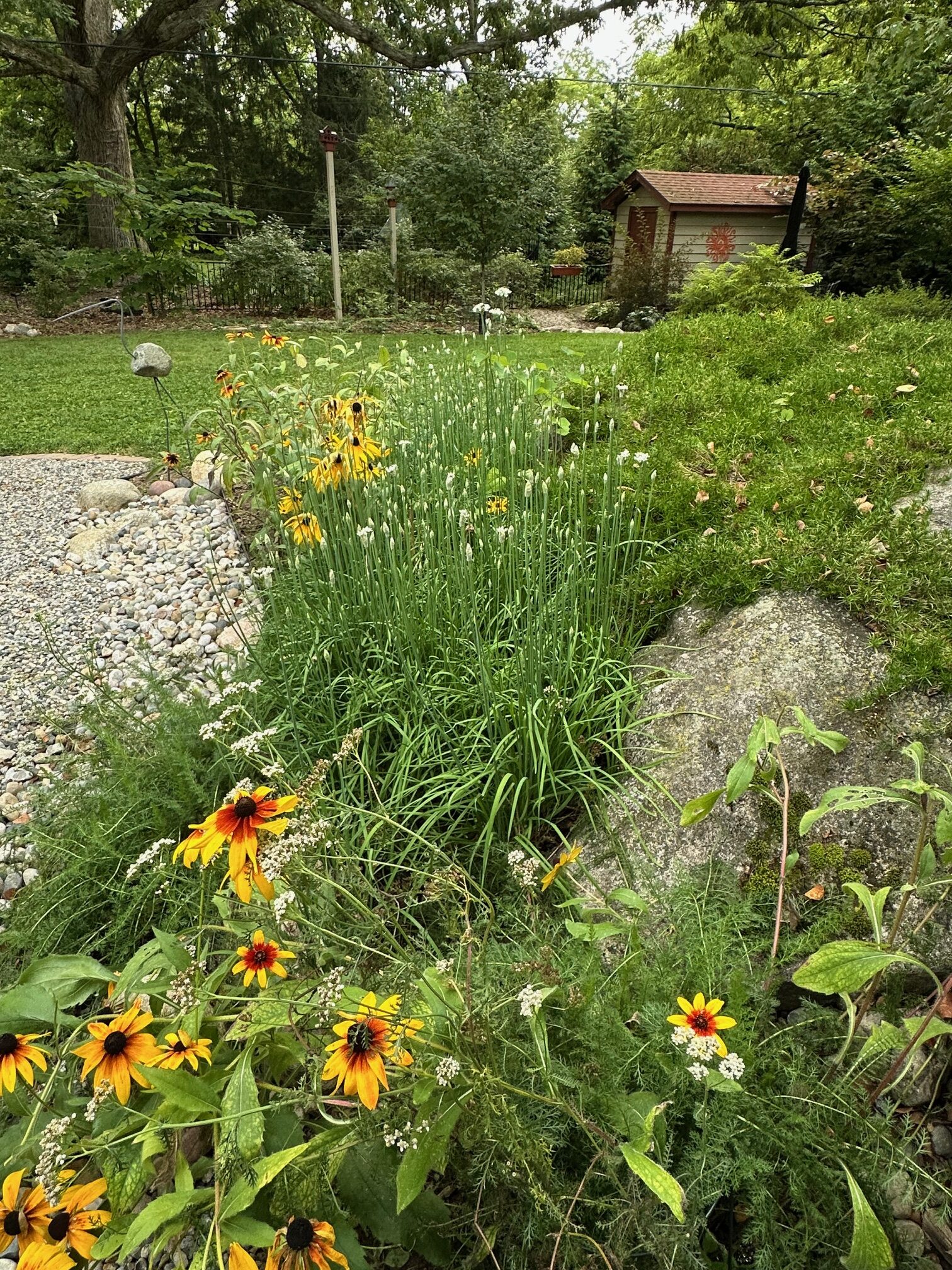
AUGUST / Sandy K.‘s yard – There are three primary reasons, in order of importance, that determine a plant choice for my yard: native, deer resistance, and providing flowers or leaves for botanical printing. I have been a gardener forever it seems, an avid deer resistor for eight years, and a botanical printer for five. My first goal was to rid my yard of invasives. Those were about one-quarter-acre of vinca, large stands of privet which the former owner had planted, volunteer buckthorn, and large swaths of Dame’s Rocket. My ultimate goal was to bring my half-acre lot up to 70% native plants. After our house remodel, the landscaper gave us wonderful bones: two Amelanchier (serviceberry), two native viburnum, a Sumac cultivar, plus many non-native shrubs and evergreens. I have tales to tell of deer resistance and the work of removing invasives. I think the share of native plants in my yard is now approaching 70%.
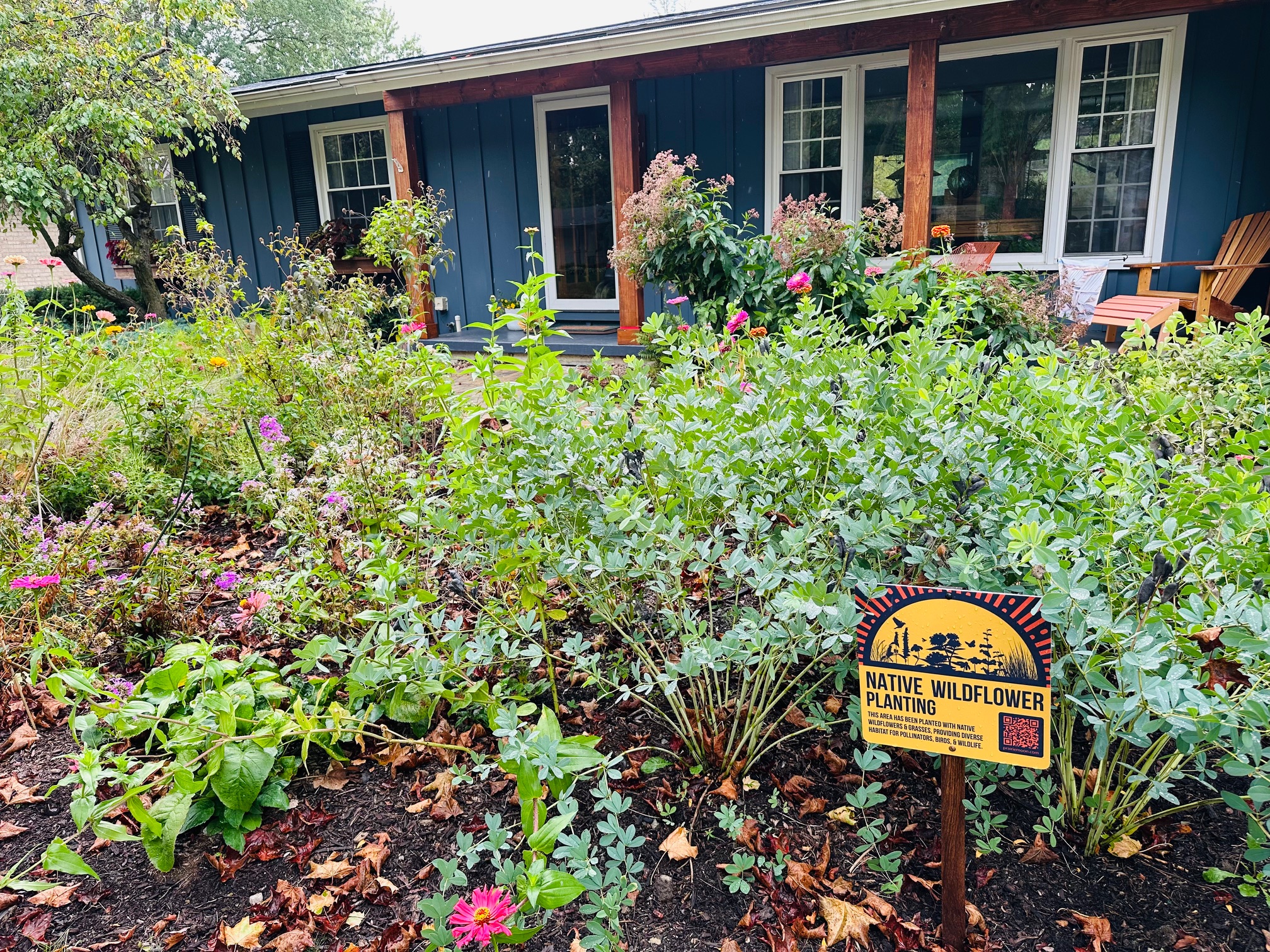
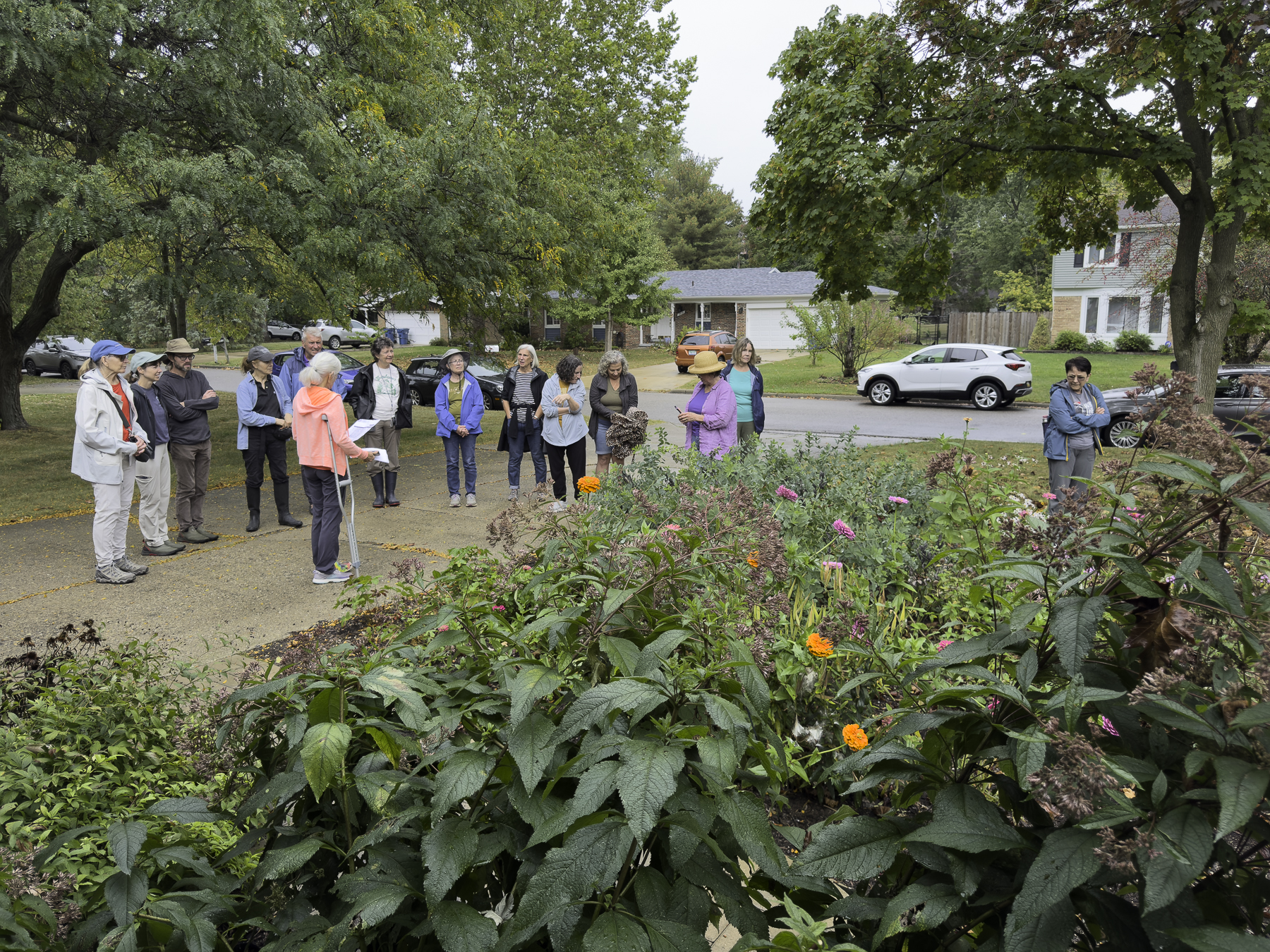
SEPTEMBER / Jan M.’s yard – We bought our house three years ago. Two things happened almost simultaneously last spring to radically change our front yard. I read Doug Tallamy’s Nature’s Best Hope, and we needed foundation work done on our basement’s front wall. Once the basement wall was shored up and the yard was all mud, I informed our contractor that I wanted to more than double the size of the former front bed and have all native plants installed. He scratched his head but came through. A delivery of 88 one-gallon plants arrived, most of them native. My other main project has been working to eliminate the many beds of ditch lilies on the side and back of the house and replace them with native plantings.
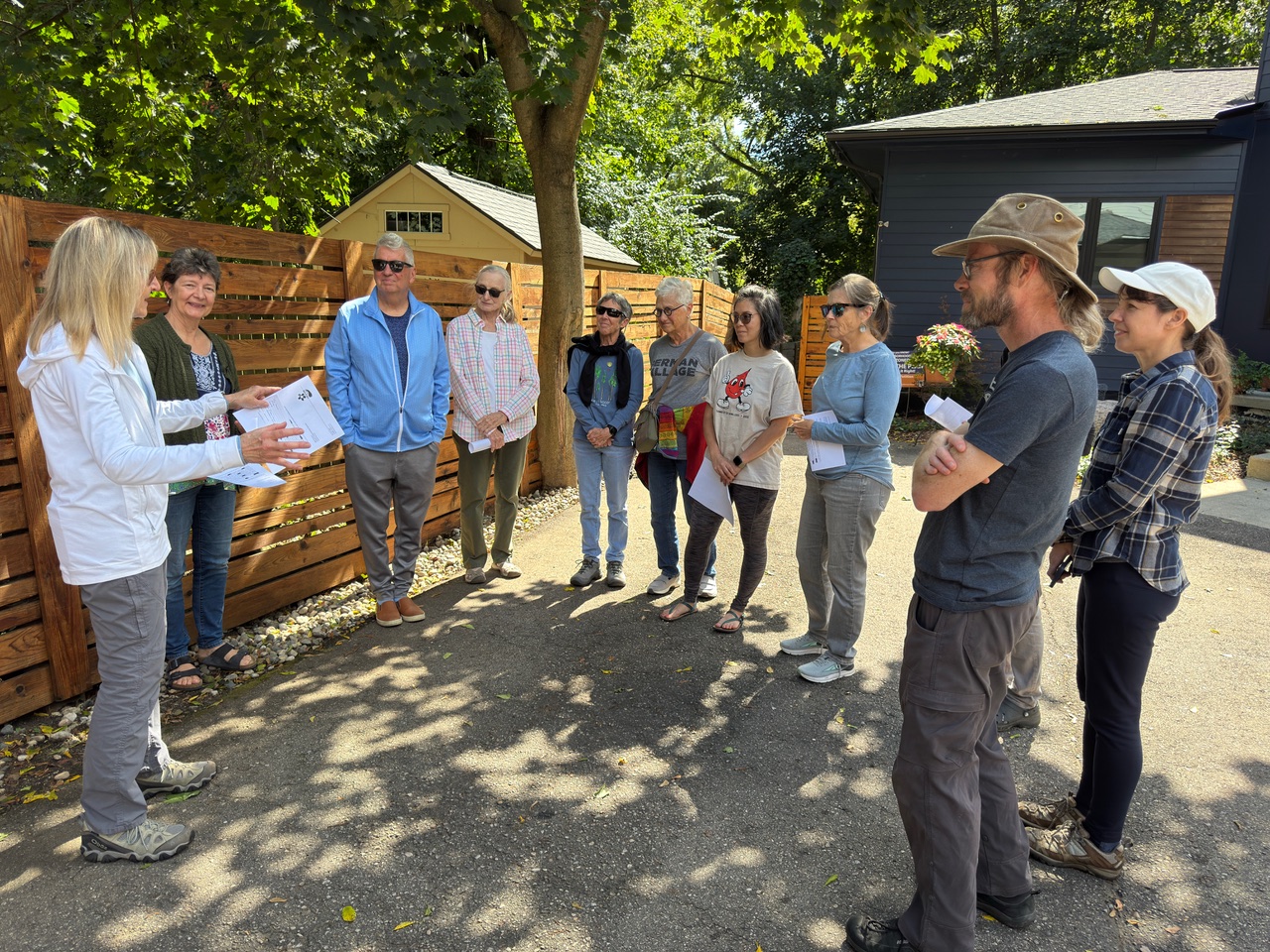
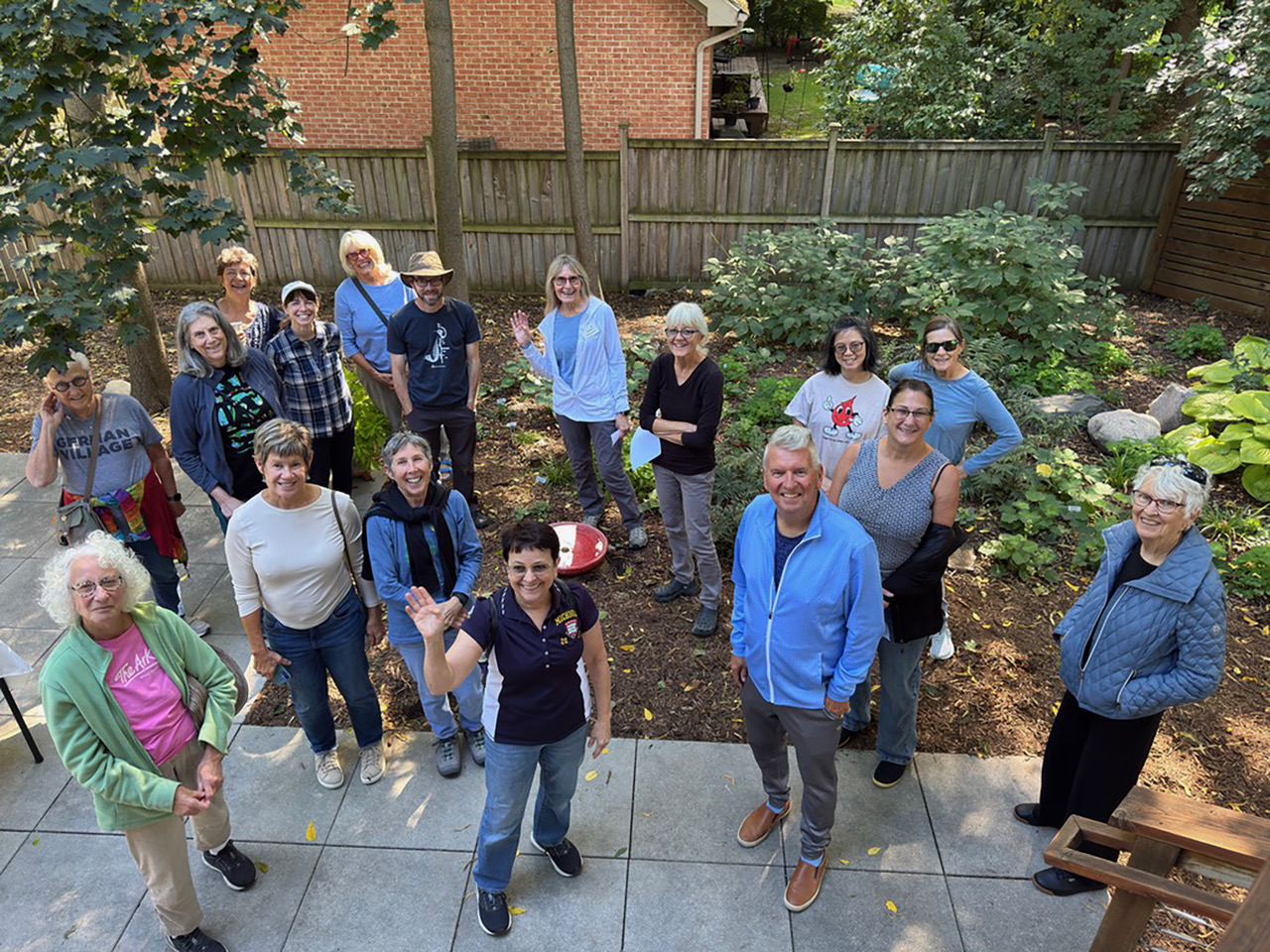
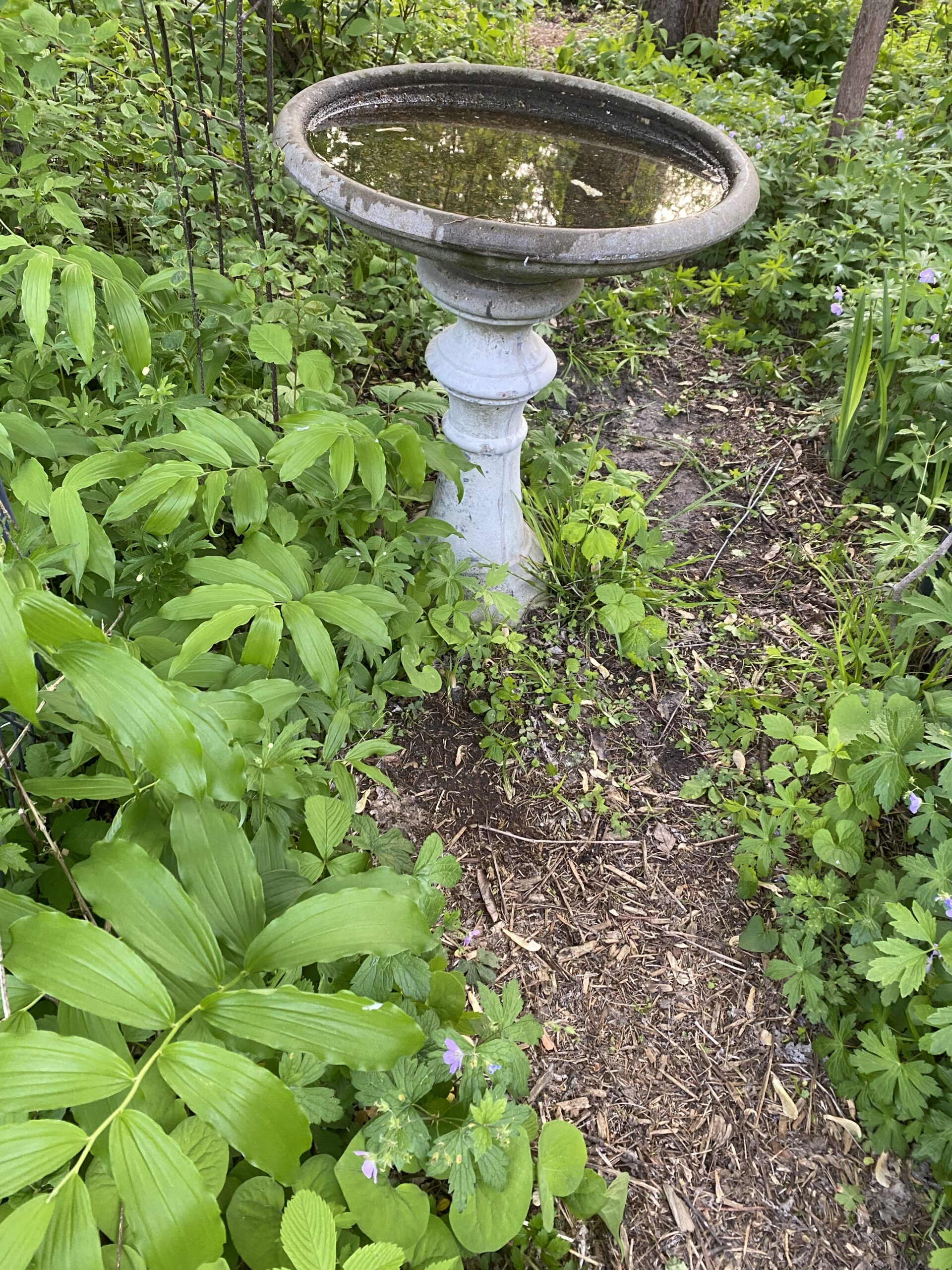
SEPTEMBER / Susan M.’s yard – Susan is a native of southwest lower Michigan and moved to Virginia after graduation from University of Michigan in 1979. She moved to Ann Arbor in late 2023 and bought her home on Felch Street in February 2024. She has been re-learning the growing seasons and ecology of Michigan over the past year. Following a season of removing pachysandra, vinca, and assorted other invasive plantings from the small wooded yard, she completed a Master Rain Gardener class this past spring and then worked with Matt Demon to finalize a plant list for her rain garden as well as a small front yard native garden and two small woodland gardens in the backyard. You will find a mostly shaded yard with a generally thriving population of young native plants. Susan has plans for moving some plants around this fall including some non-native ferns and some hostas which were in the yard when she purchased the property. She welcomes opinions and ideas for moving forward with her small native gardens.
2024
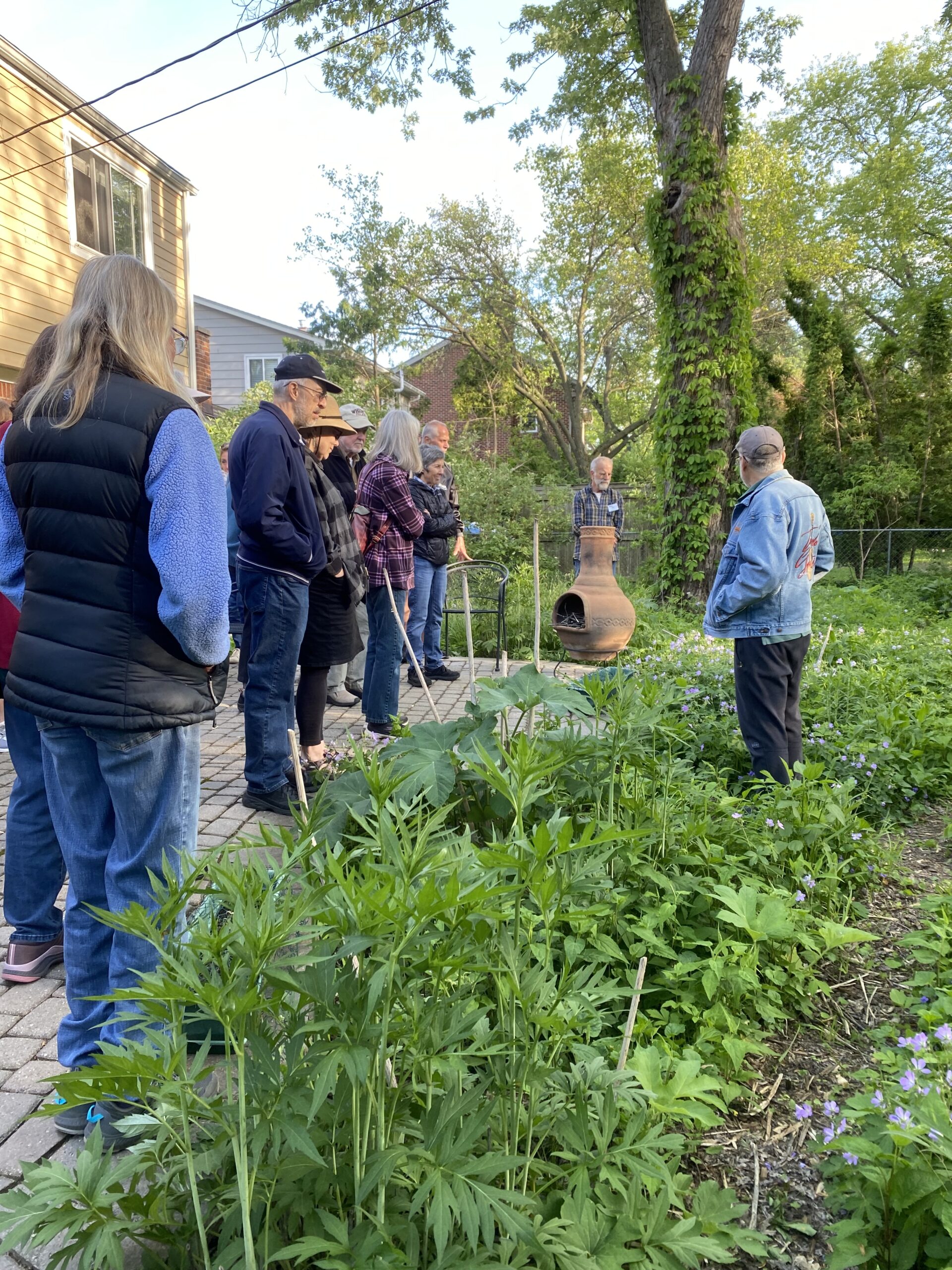
JUNE / Roger M.’s yard – Roger shared his experiences developing and caring for his native plants garden, which covers his entire front and back suburban yard. The goal of Member-to-Member garden tours (aka Show Me-Tell Me), is to allow members to share experiences, ideas, and challenges with maintaining native plants in our landscapes.
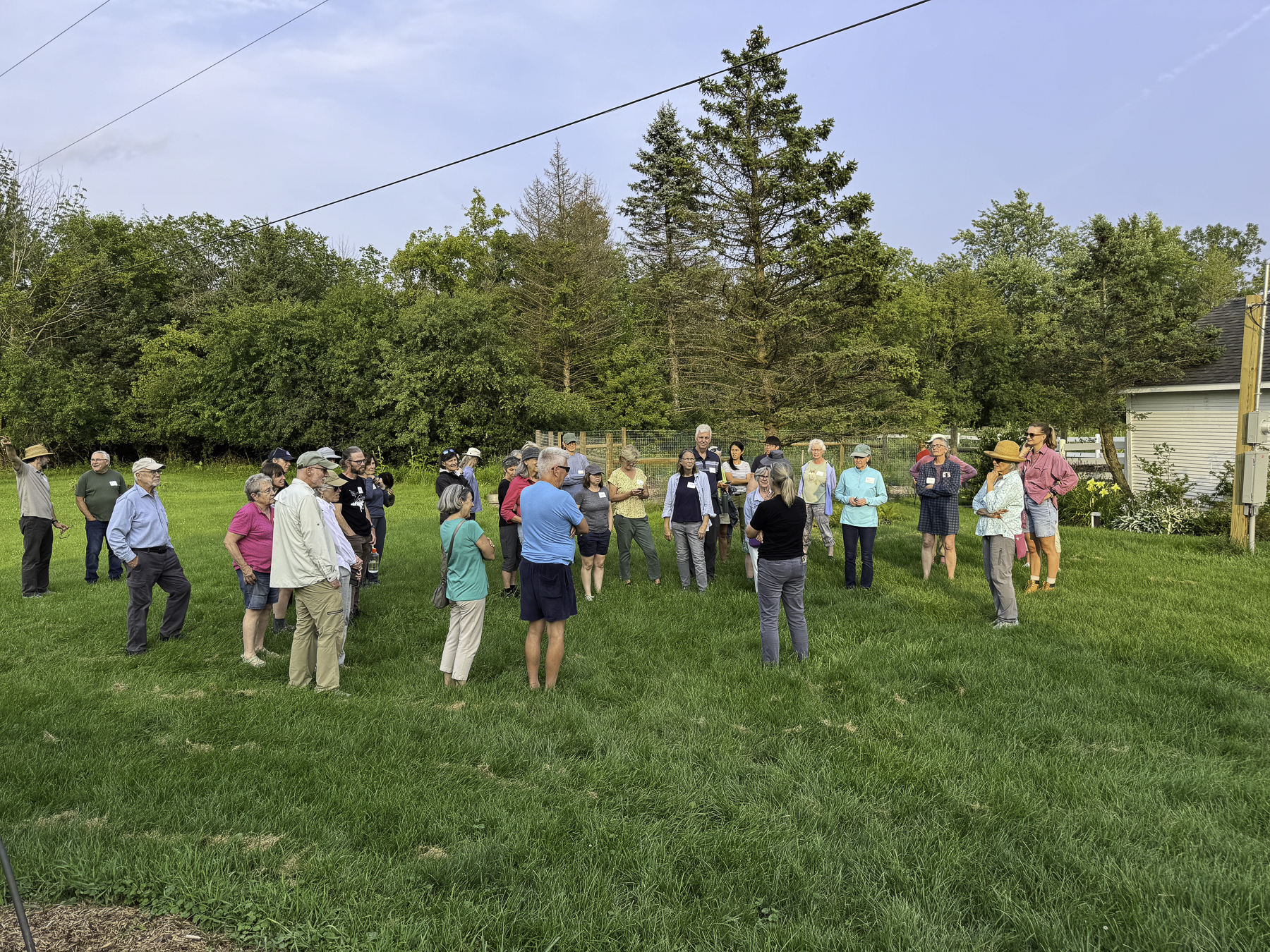
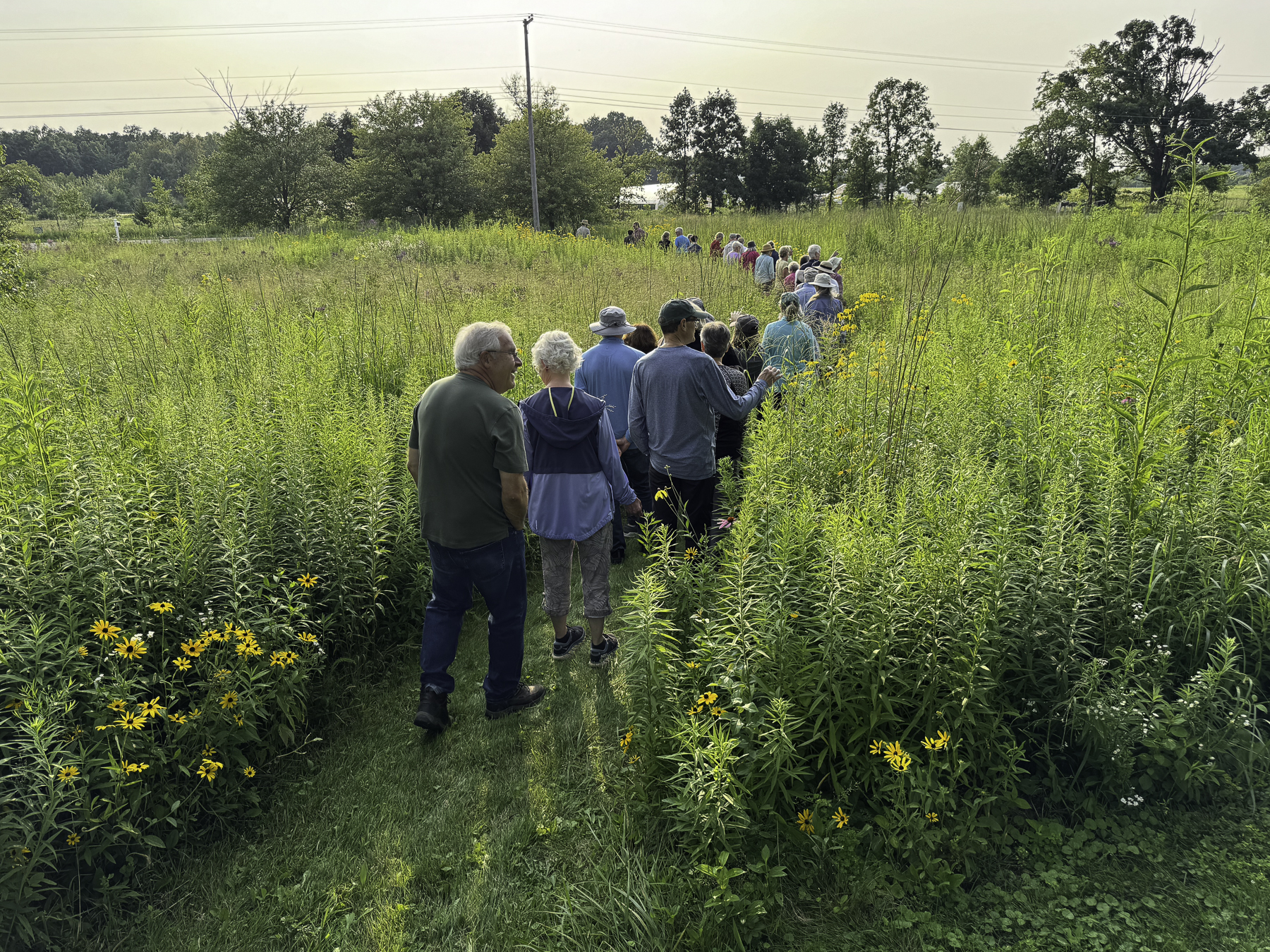
JULY / Ruth Ann L.’s property – Our family of four moved to our little farm northeast of Ann Arbor 28 years ago. About 100 years ago, this farm had been the largest dairy farm in Washtenaw County, but it has since been subdivided many times so that now the original house and barn sit on 15 acres. In 2018 we decided to convert an acre of lawn in front of the house into a native meadow/ prairie. We hired Feral Flora to design and install this planting, and there we did our first controlled burn in 2023. In 2021, we began work on the cow pasture and hired a company with a forestry mulcher to mulch more than half the field—twice, with six to nine months between the mulchings. We also seeded several big sections with native mixes. Some have been more successful than others, but we keep working on it. And we’ve added at least 100 native trees, some small and some more substantial. We see this as a long-term project.
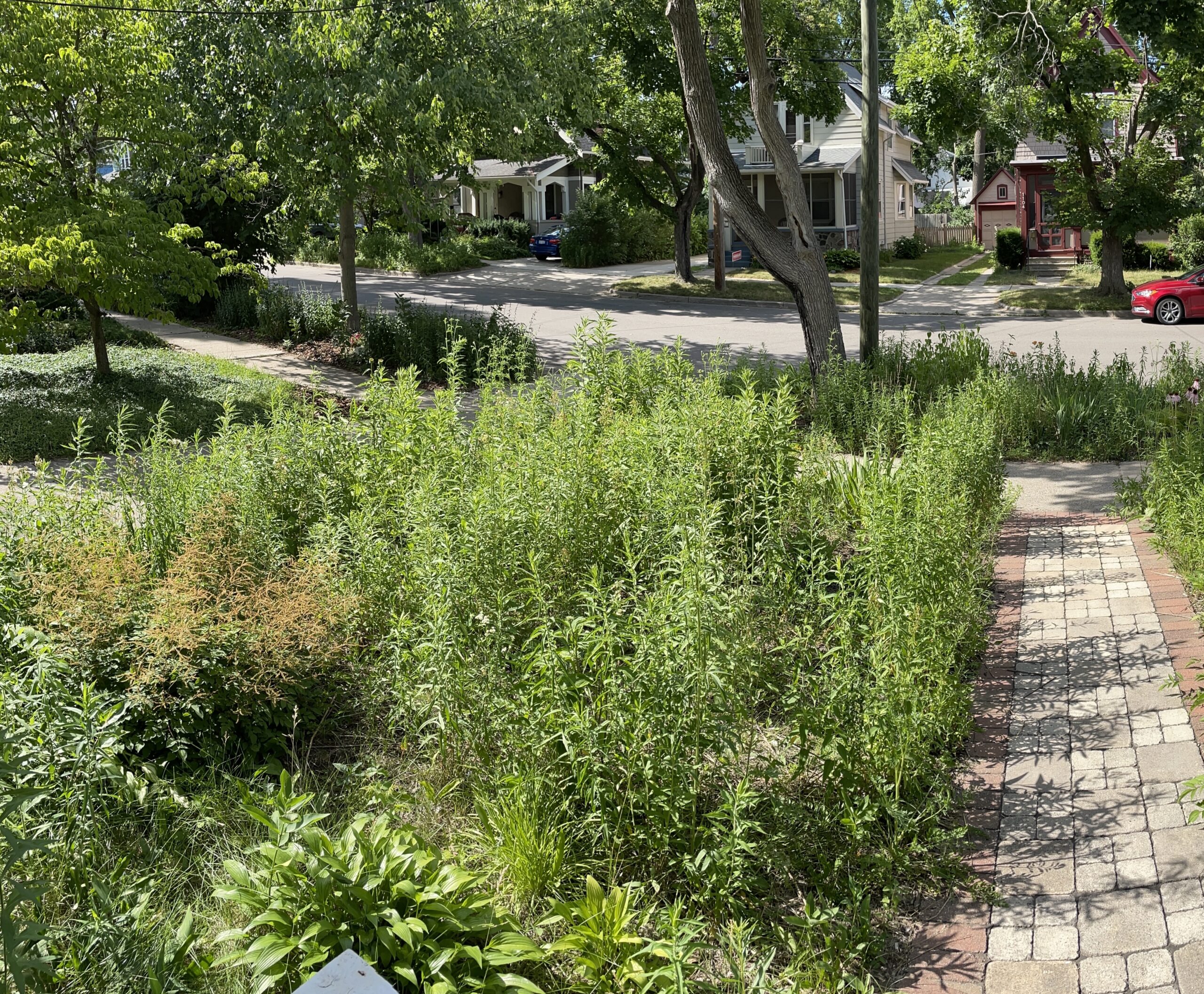
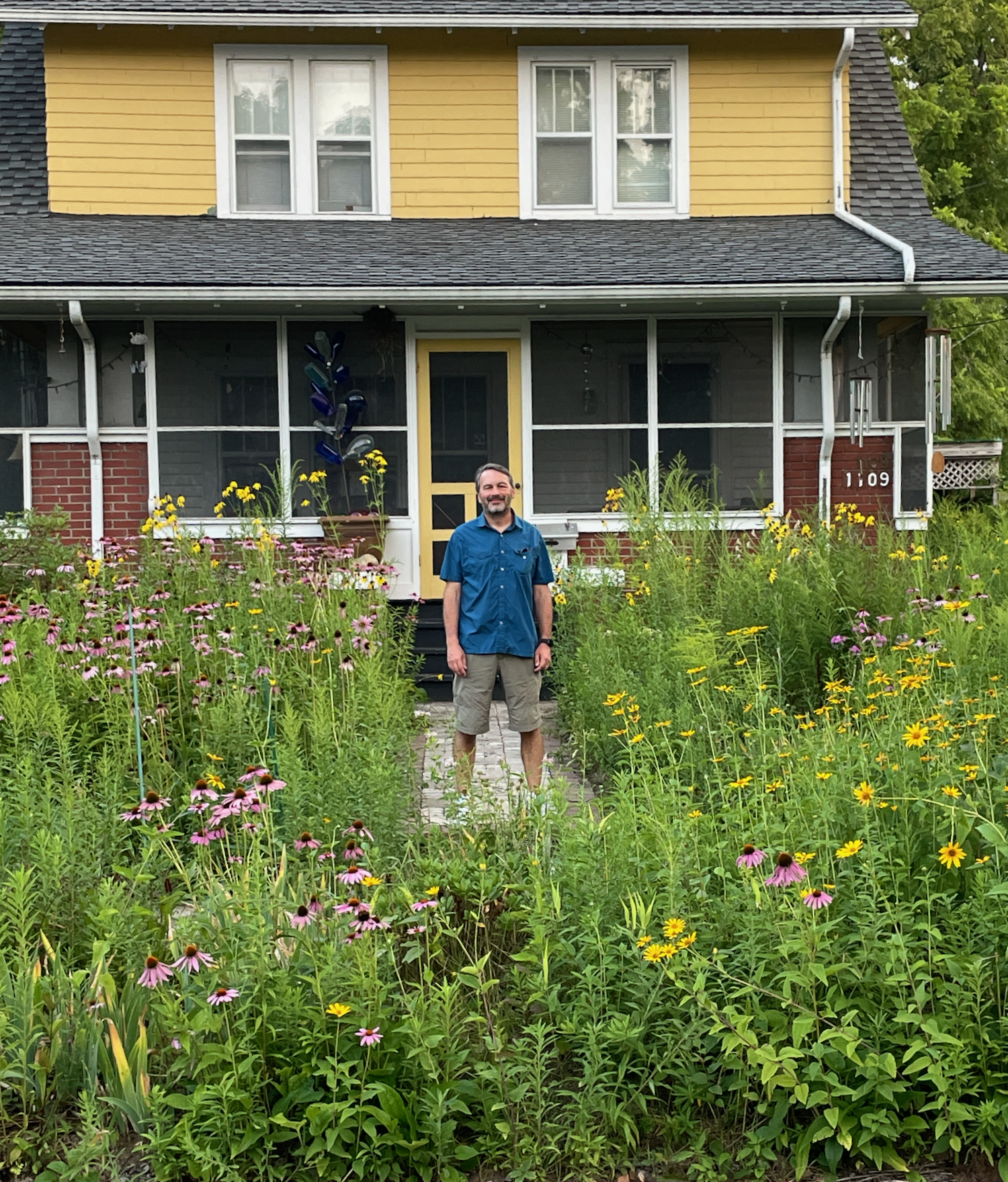
AUGUST / Brooks C.’s garden – I live on the Old West Side of Ann Arbor on W. Washington St. Like most properties on the Old West Side, my lot is small. I started converting the front yard six years ago to native plants, and it is still a work in progress. Instead of starting in the backyard—which is frequently recommended when transitioning to native plants—I started in the front yard because I didn’t want to hide the transformation, and I wanted people to see what can be done. Also, my wife and I spend time on our front porch (as do our neighbors), and we wanted to enjoy the flowers. My front is full sun and has sandy soil, and I have mostly planted plugs with some seeds thrown in for good measure. My approach is to plant random things knowing that I can always move, cut down, or dig up anything that doesn’t behave. My yard starts blooming in late April and continues blooming until the fall. We get a decent amount of wildlife (butterflies, moths, and birds), including, unfortunately, rabbits. Our biggest joy is hearing compliments about the yard from people walking down the street. I can happily share the journey of the initial planting, which typically requires maintenance.
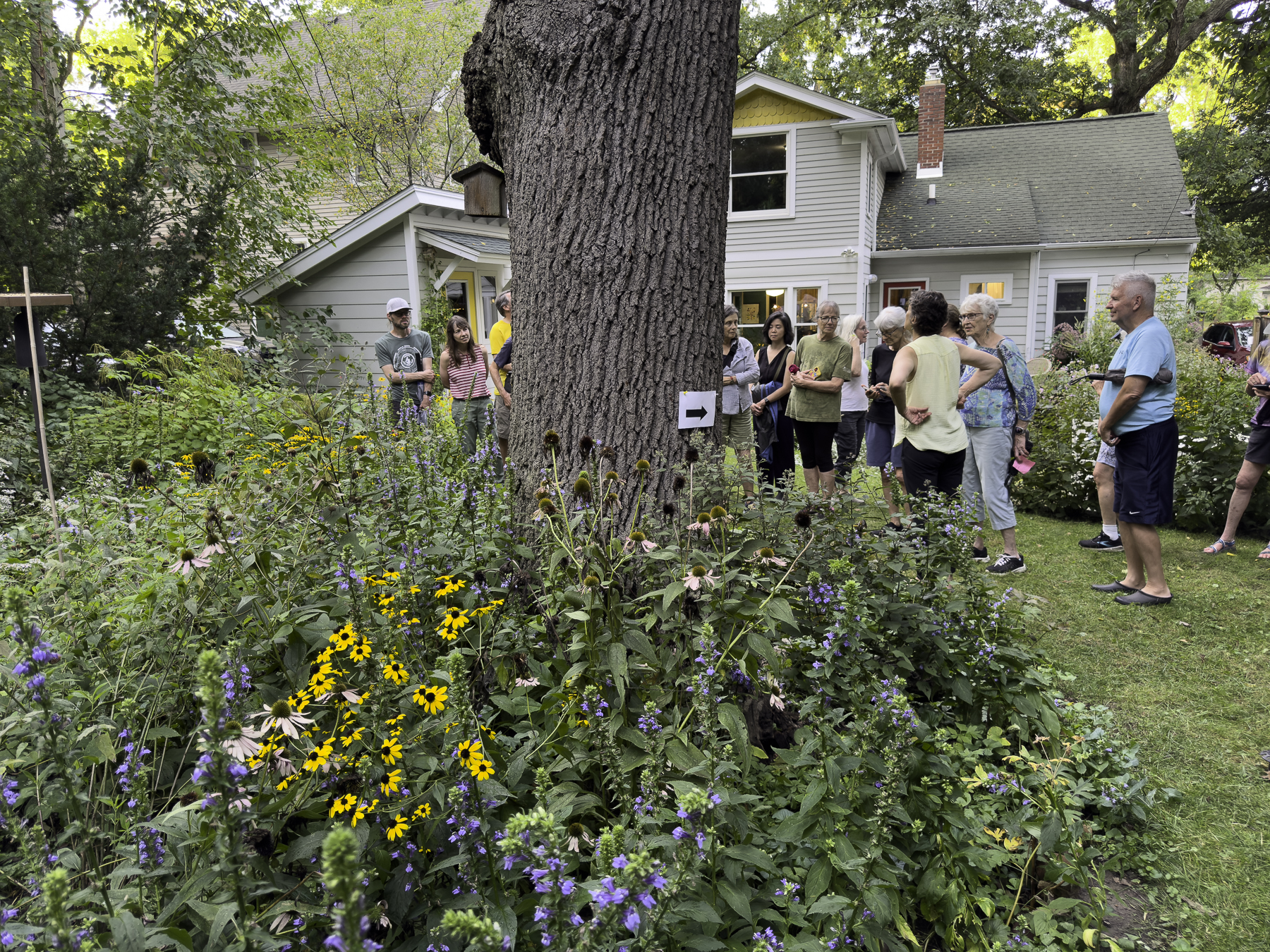
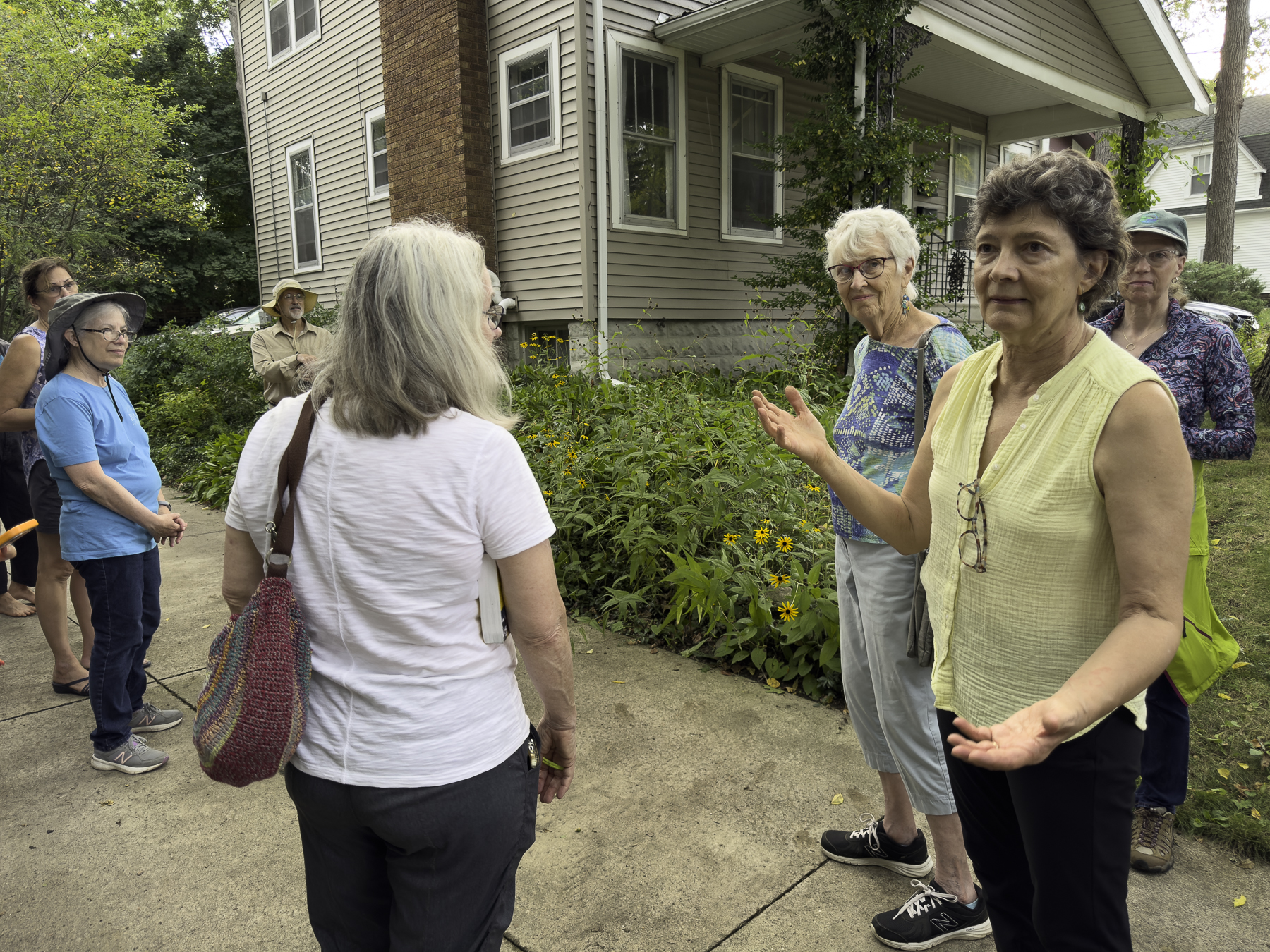
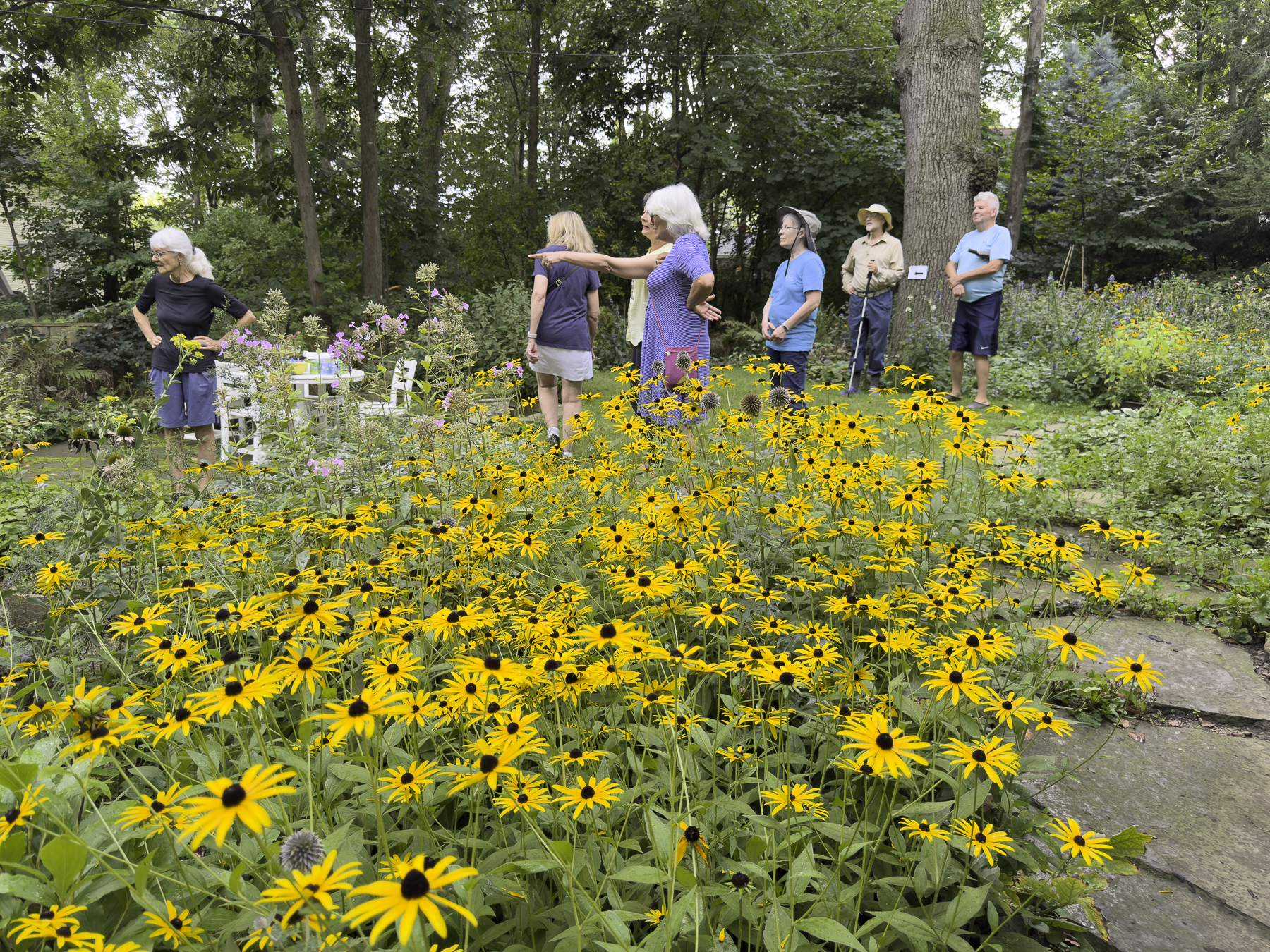
AUGUST /Christine G.’s garden – We’ve lived at our home on Dexter Ave in Ann Arbor for 40 years and have slowly transformed our property into a native garden. I inherited peonies, phlox, hostas, lily of the valley, and daylilies from the previous owners, but began incorporating native plants at least 30 years ago. Our neighborhood has towering black, red, and white oaks and black walnuts. A few years ago we lost three massive trees, and that gave me more opportunity to go native (more sun!). In addition to our backyard, we own a small landlocked triangle of land behind our house. This former grape vineyard was completely overgrown. We removed metal posts, trellis wires, an old shed, sidewalks (yes, concrete sidewalks), and invasive plants, and we work to keep this area as natural as possible. We’ve enjoyed seeing what will come up on its own, which includes a lovely stand of alternate leaf dogwood.
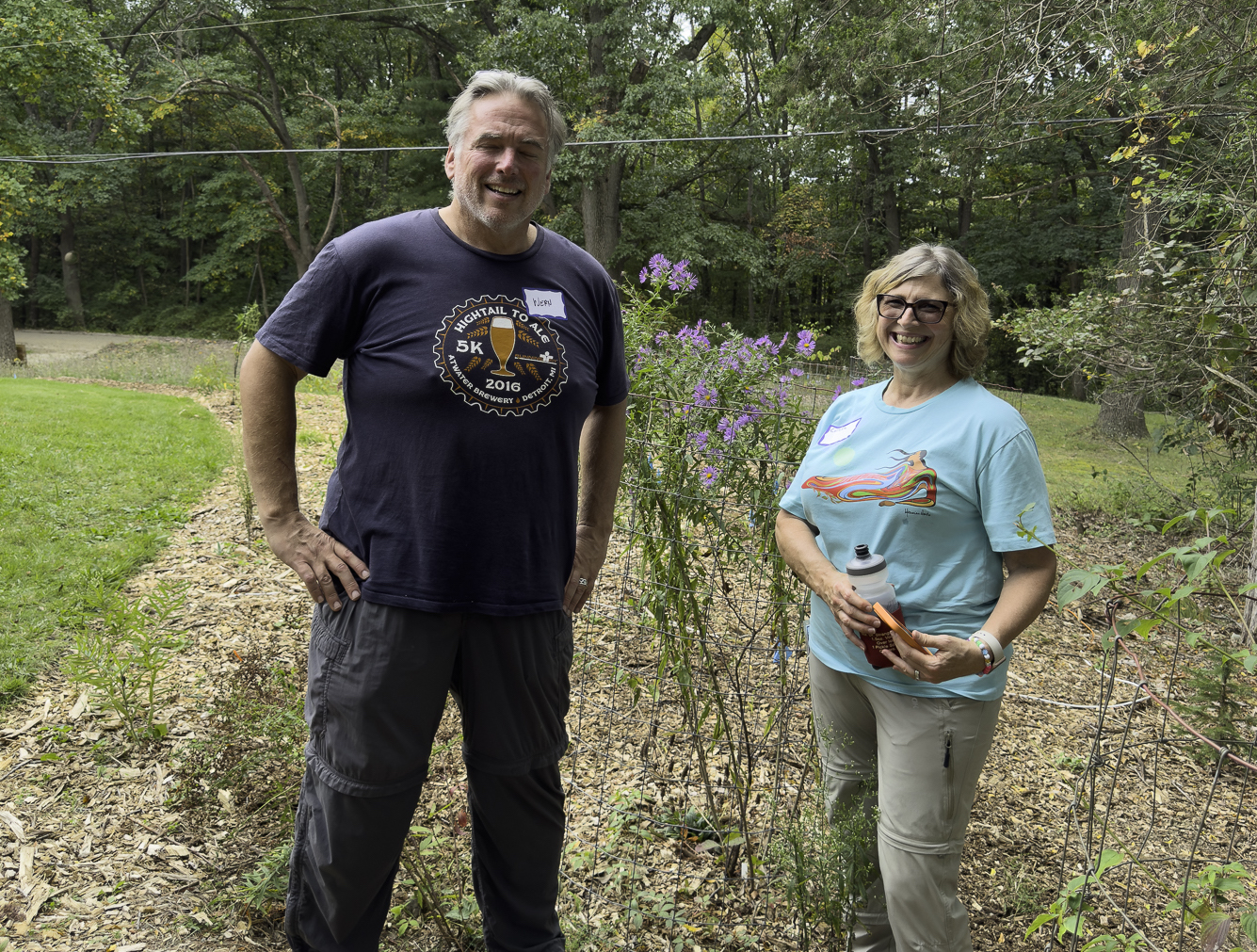
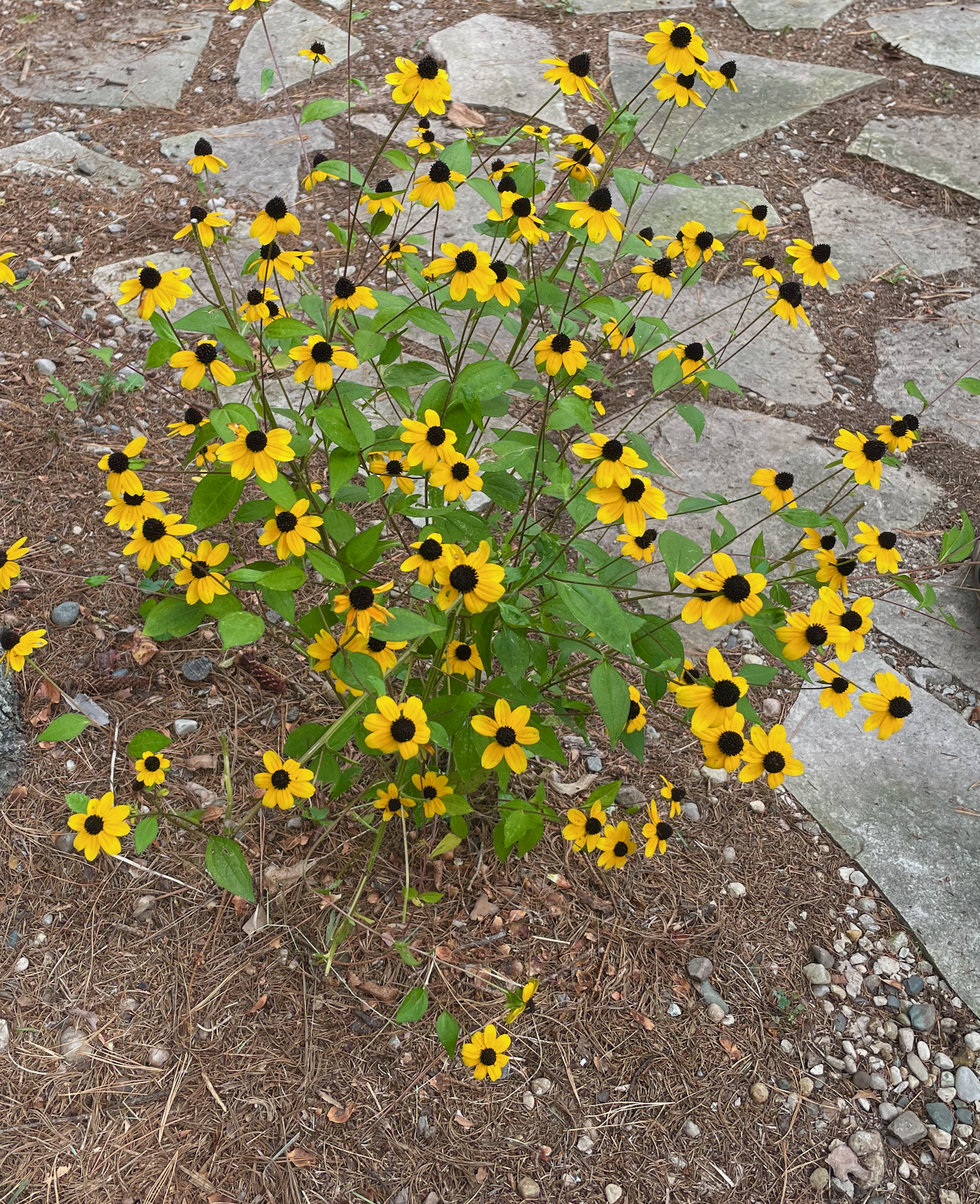
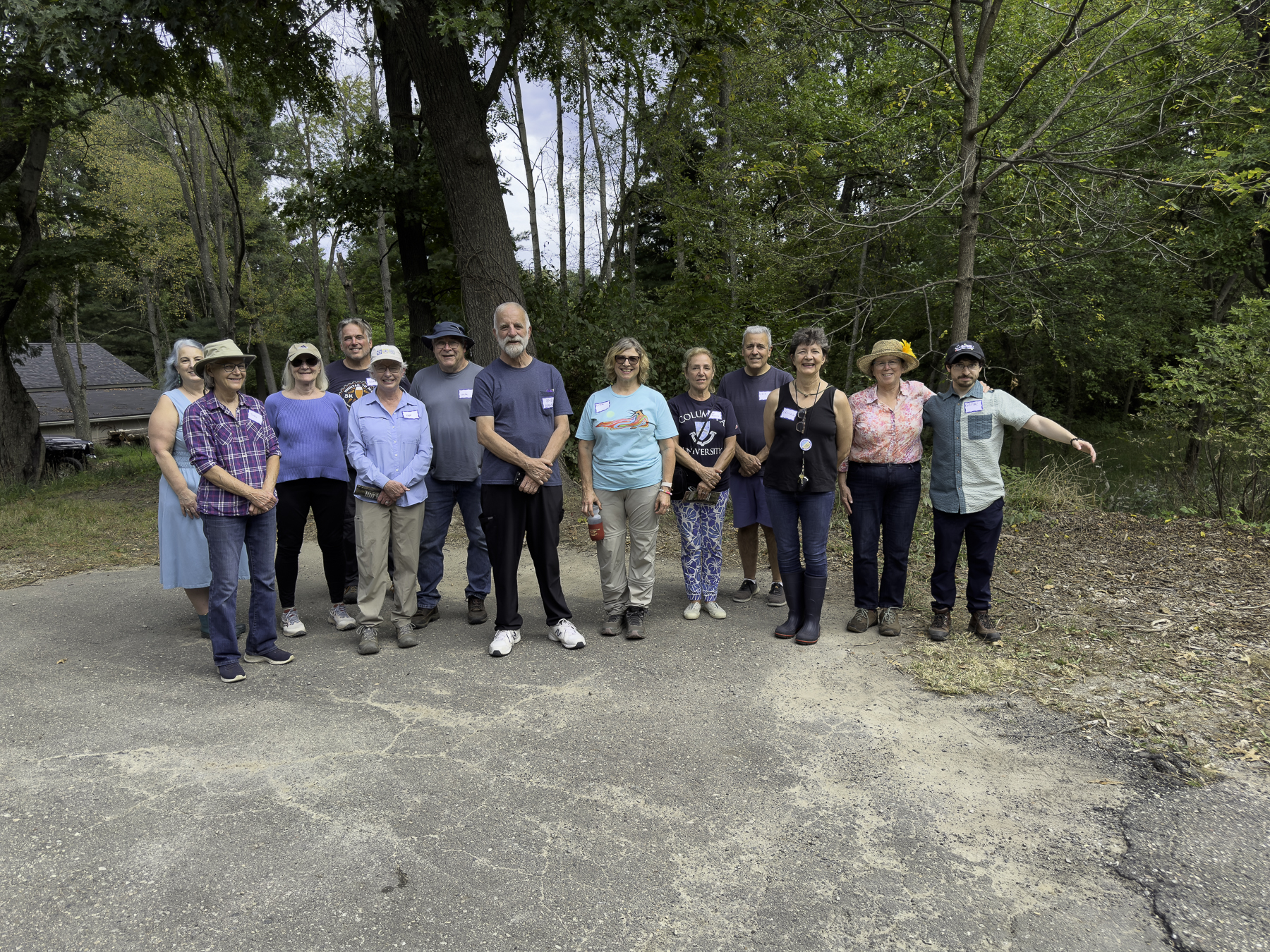
SEPTEMBER / Linda V.’s property – In October 2020, my husband and I purchased a small ranch house on 8.33 acres, primarily because I fell in love with the forest that covers about 90% of the property. In 2022, I suspected oak wilt* (Ceratocystis fagacearum), and that is when my desire to allow the land to return to nature started me on the path of forest restoration and conservation and native plants. I am still in the early stage of this journey, but some of the property has been seeded and planted up with native flora plugs and trees and shrubs. I am working with the U.S. Department of Agriculture (USDA) Natural Resources Conservation Service (NCRS) on this project, and an NRCS grant I received allowed me to hire a forester to survey plants, soil, etc.