Small Forests, Big Benefits: The Ann Arbor Buhr Park Pocket Forest
Pocket forests are a way to reduce lawns, establish healthy ecosystems, and build community. They support the Wild Ones mission pillars of education, advocacy, and collaborative action.
An informal coalition of three nonprofit organizations in Ann Arbor—Wild Ones Ann Arbor Area, the Buhr Park Children’s Wet Meadow Project, and the Ann Arbor chapter of Citizens’ Climate Lobby—began with curiosity and research about “Miyawaki forests”—small areas (in contrast to natural forest ecosystems), often in urban settings, using an approach developed by Japanese botanist Akira Miyawaki.
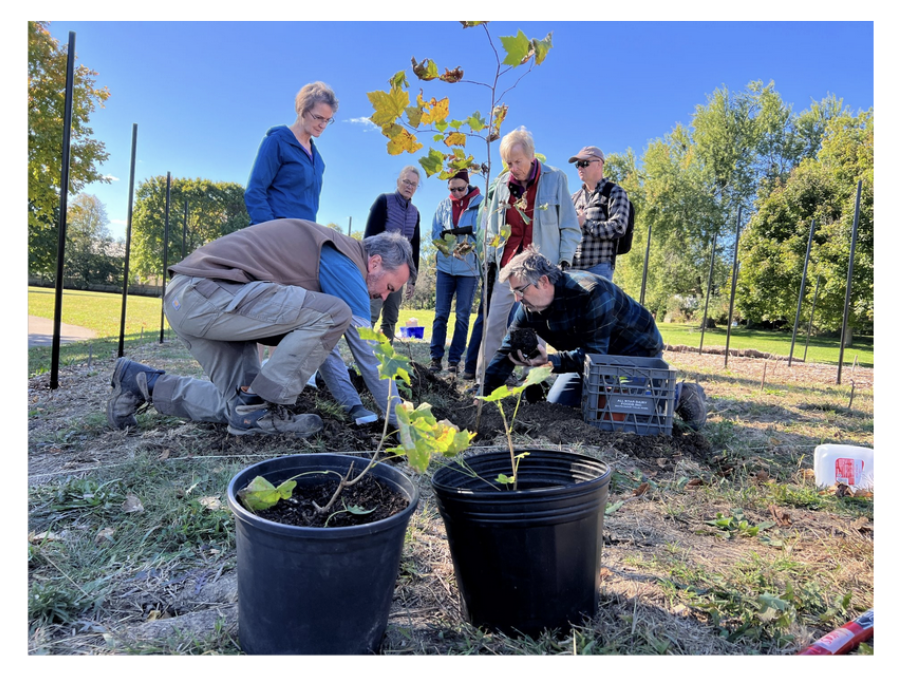
In fall 2024, we planted a demonstration forest of 300 native trees and shrubs in a 2,500-square-foot-area in Buhr Park, one of Ann Arbor’s largest and most-used public parks. The Buhr Park Children’s Wet Meadow Project first installed wet meadows in the park more than twenty years ago, profoundly reducing and managing what had been a serious water runoff problem, and introducing both the city and the community to the beauty and benefits of native plants. The park is now a source for city-supervised native seed gathering each fall.
We are excited to have installed our little pocket forest, and we are already seeing broad public interest in making more of these ecologically efficient little forests.
The forest consists of three different soil preparation methods:
- Miyawaki-inspired (most expensive): We used a small excavator to dig trenches (depending on the degree of soil compaction, the depth varied from about 18” – 24”). The contractor mixed the removed soil with clean composted soil, scores of bags of rotted leaves gathered from other sites, and wood chips provided by the city. They then returned the increased soil to the bed to promote beneficial fungal growth and decaying organic material, followed by a straw mulch over the surface.
- “Lasagne” method (moderately priced): We layered cardboard, soil compost, dead leaves, and four inches of wood chips over the mown grass.
- Simple method (low budget): We covered the bed with eight inches of wood chips—enough to kill the grass—without other amendments.
We used these three different approaches because while the deep tilling and heavy amendment approach generally recommended by the Miyawaki method has been successful, it requires time, machinery, and money. An important goal of our project is to encourage small forests in many available sites, including home yards. So, we want to learn if easier, cheaper, and less intrusive methods will also work to achieve the benefits of a very small, dense forest.
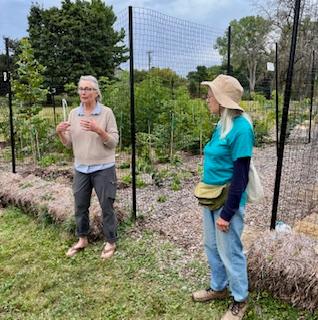
The forest is surrounded by an eight-foot-high deer fence with wood chip pathways for watering / weeding access.
In 2026 we are implementing a program of observation and monitoring, to identify “who is coming to the forest” (bugs, birds, wildlife), and to measure soil health, insect biodiversity, pollinator support, bird sightings, speed of tree growth, and human health and well being. We will also continue to carry out basic maintenance, such as weeding, fence security, and any plant culling made necessary by invasive insects, fungi, or other pests or diseases.
Please be sure to visit our website – https://pocketforests.org – which has an informational video, a recording of the June 18, 2024, webcast about pocket forests featuring Douglas Tallamy, and a colorful “Pocket Forest Principles” half-sheet that we have used widely to promote the benefits of native plants in landscapes everywhere. We hope you will consider building a small forest in your landscape. If you do, we very much want to know about it! Please email us at [email protected]